
Nutrition and Mood Support: Omega-3, Magnesium, and the Gut — Without Treating Anxiety
Food and targeted nutrients influence pathways that intersect with mood, stress resilience, and sleep quality. That is real biology. It is not a license to market supplements as treatments for anxiety disorders or depression. This article stays in structure/function territory.
Hard Boundaries
Mental health conditions require professional care. Clear limits:
- In scope: nutritional factors that support normal mood, stress response, and neurological membrane/gut signaling
- Out of scope: diagnosing or treating generalized anxiety disorder, major depression, panic disorder, PTSD, or any psychiatric diagnosis
- If you have suicidal thoughts, severe anxiety, or functional impairment, seek urgent clinical help — do not self-treat with supplements
Dietary supplements are not intended to diagnose, treat, cure, or prevent any disease.
Omega-3s: Membrane Biology and Mood-Supportive Context
EPA and DHA incorporate into neuronal and immune cell membranes and participate in signaling environments relevant to inflammatory tone and brain function. Nutrition research often discusses oily-fish intake or Omega-3 status in relation to mood-supportive outcomes in general populations — with effect sizes and study quality that vary.
Responsible framing:
- Support brain membrane fatty-acid composition and resolution biology
- Prefer food patterns rich in seafood where possible; use quality supplements to close gaps
- An Omega-3 index or clinician-guided testing can make the loop measurable (biomarker selection)
- Do not claim to treat clinical depression or anxiety disorders
ABTIDE’s phospholipid Omega-3 option sits in Essentials. Mechanism and delivery detail: krill oil science. Adjacent neural plasticity nutrition: BDNF primer.
Magnesium: Nerve, Muscle, and Stress-System Support
Magnesium participates in hundreds of enzymatic reactions, including neuromuscular transmission and pathways involved in relaxation physiology. Many adults fall short of recommended magnesium intakes when diets are low in legumes, nuts, seeds, and leafy greens — or when intake is displaced by ultra-processed patterns.
Structure/function uses commonly discussed in wellness (not disease treatment):
- Support normal muscle and nerve function
- Support relaxation and sleep-quality contexts when intake is inadequate
- Complement training recovery when sweat losses and low intake stack up
Form matters for tolerance (glycinate and other chelates are often gentler than oxide for some people). Excess supplemental magnesium can cause GI upset; people with kidney impairment need clinician guidance.
Product lane for foundational mineral support: Calcium & Magnesium in Essentials. Systems view: Our Science.
Gut Ecology: Mood-Adjacent, Not a Cure
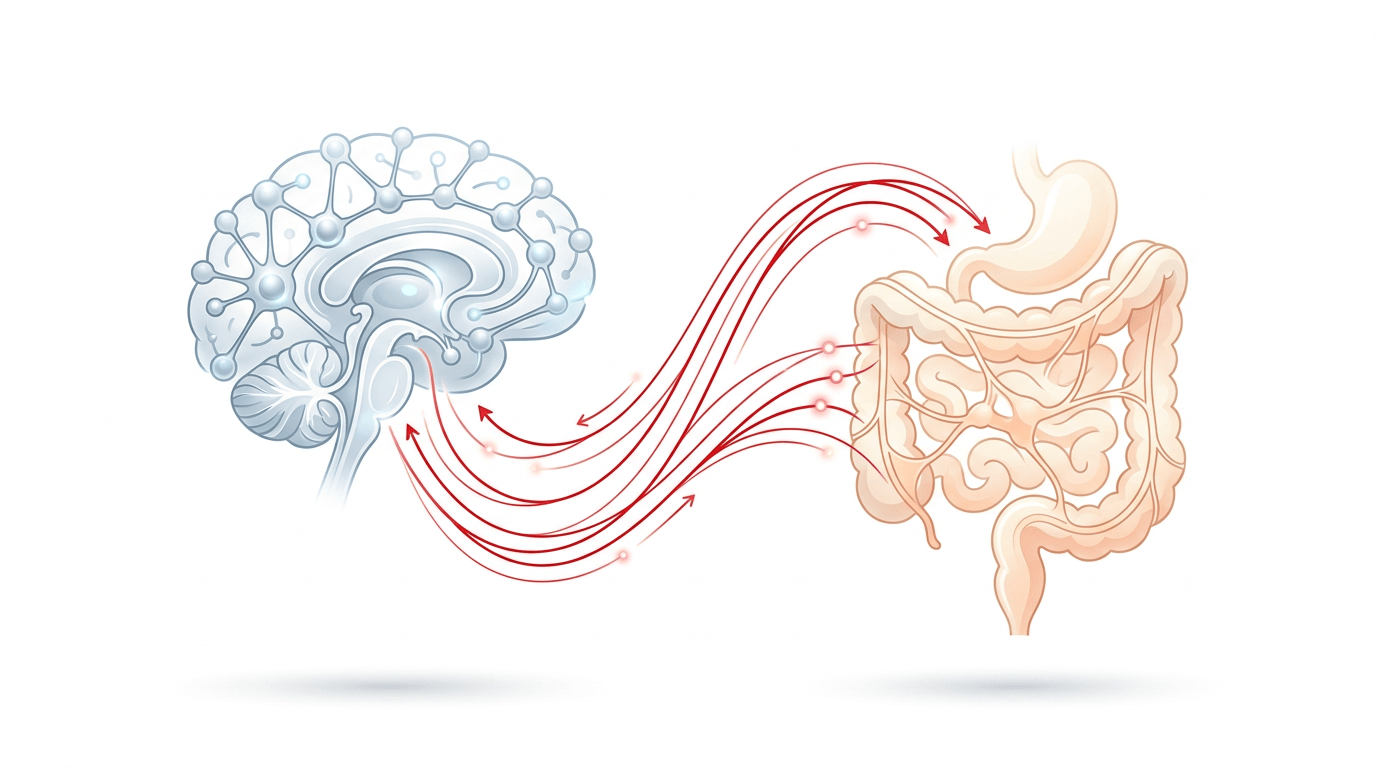
The gut–brain axis links microbial communities, immune tone, vagal signaling, and neurotransmitter-related metabolites to brain function. Approximately most of the body’s serotonin is produced in the gut — a fact that motivates microbiome interest without authorizing “probiotics cure depression” claims.
Supportive (not curative) levers:
- Dietary fiber and polyphenol diversity for microbial substrates
- Sleep and stress hygiene (the axis is bidirectional)
- Thoughtful multi-strain probiotics with strain identity and viable delivery — ecological support, not psychiatric medication
Deep dive: the gut–brain axis. Buying criteria: probiotic buying guide. Products: Probiotic series.
Do not use gut supplements as a substitute for therapy, medication, or crisis care when those are indicated.
Lifestyle Still Outranks Capsules
Nutrient levers underperform when major drivers of mood distress remain unaddressed:
- Chronic sleep restriction
- Social isolation and unresolved trauma (clinical domains)
- Alcohol excess and ultra-processed dietary load
- Physical inactivity
- Unmanaged medical conditions
A restrained mood-supportive nutrition pattern for generally healthy adults:
- Eat a protein- and plant-forward pattern; include seafood weekly when possible
- Close Omega-3 and magnesium gaps with food first, supplements second
- Train most weeks — resistance plus some aerobic work supports stress physiology
- Consider gut ecology support if diet diversity is low (probiotics)
- Keep cellular/metabolic foundations honest — EAAs for recovery (amino), mitochondrial redox when relevant (ergothioneine / research-ergo)
- Remeasure adherence and labs inside a clinician-guided precision nutrition loop
Bottom Line
Omega-3s, magnesium adequacy, and gut ecology are legitimate nutritional levers for supporting normal mood and stress resilience. They are not treatments for anxiety or depression. Pair food quality and sleep with professional mental-health care whenever symptoms are clinical — and keep supplement language in structure/function bounds.
These statements have not been evaluated by the Food and Drug Administration. This product is not intended to diagnose, treat, cure, or prevent any disease.
ABTIDE Wellness — Vancouver. Educational only. Not medical advice.